Most people treat the Diversity Visa (DV) Lottery like a standard social media sign-up. They spend ten minutes filling out basic info, snap a selfie against a wall, and hit submit. Then they wait. When results go live in May, they’re met with the generic “Has Not Been Selected” message.
Here’s the reality that most applicants miss: for an estimated 40% of entries, the lottery didn’t actually reject them—it ignored them. Their applications were binned by an automated validator long before the computer ever got the chance to “pick” their name. I call this the Disqualification Gap. It’s the chasm between thinking you’ve applied and actually having a valid entry in the system for the DV Lottery 2027.
For the upcoming cycle, you must treat this as a formal legal filing. The U.S. State Department doesn’t offer a “do-over.” One technical slip, a mislabeled middle name, or a photo with a subtle shadow, and you’re out for the year. This DV Lottery Guide is designed to bridge that gap and ensure your entry actually makes it into the digital selection drum.
The Technical Gatekeeper: How the State Department’s Photo AI Actually Works
I’ve analyzed thousands of failed entries, and the number one culprit is the photo. Most people assume that if a photo looks like them and has a white background, it’s fine. It isn’t. The Kentucky Consular Center (KCC) uses sophisticated validation software to check photos against rigid geometric standards. If the software can’t map your facial features with 100% precision, it marks the entry as invalid without telling you.
Shadows and Contrast: The Geometry of a Rejection
Most homemade photos fail because of lighting. Using a single overhead bulb creates shadows behind your ears or under your nose. The AI interprets these shadows as changes in your facial geometry. This confuses the facial recognition software used to detect duplicate entries, leading to an automatic flag.
You need diffused lighting. Natural light from a window is your best friend, but only if it hits your face directly from the front. Even a slight shadow on one side of your face can cause a mismatch.
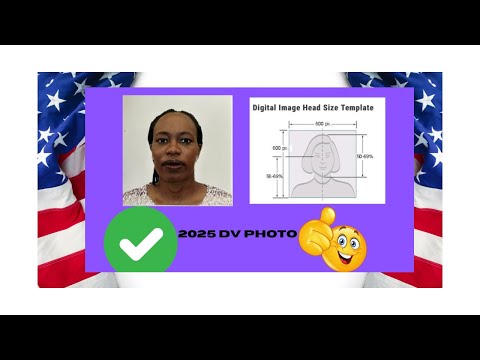
To help with this, we developed our Free Photo Validation Tool. It mimics the State Department’s logic to check for these “invisible” failures like contrast levels and background noise.
The 240KB Trap: Balancing Quality and Compression
The specs are uncompromising: 600x600 pixels, 24-bit color, and a file size under 240KB. A common mistake is over-compressing a large photo to meet that size limit. If your photo looks pixelated when you zoom in, the AI won’t be able to distinguish the edges of your eyes or mouth.
Then there’s the “no glasses” rule. Since 2016, the U.S. Department of State has made this a hard requirement. Even if you wear glasses every day, take them off. A glare on the lens or a frame covering a fraction of the eye is an instant disqualification.
Education Eligibility: Navigating International Equivalency Standards
The rule states you must have a high school education or its equivalent. However, “high school” is a flexible term that varies between Lagos, London, and Lima. The U.S. standard is strictly a “12-year course of elementary and secondary education.”
WAEC, GCSE, and the 12-Year Academic Rule
For applicants in West Africa, the WASSCE (WAEC) is the benchmark. You generally need at least five credits, including English and Math, often required in a single sitting. If you’re using GCSEs, you typically need a combination of “O” levels and “A” levels that total 12 years of formal schooling.
In Francophone regions, the Baccalauréat is the standard. A Brevet alone won’t suffice. If you’re unsure, look at the Foreign Affairs Manual (FAM) 9 FAM 502.6. This is the handbook consular officers use. If your diploma doesn’t qualify you for university in your home country, it likely won’t pass the DV lottery test.
The Vocational School Trap
This is a major pain point. You might have spent three years at a technical college learning plumbing or nursing assistance. While these are valuable careers, a vocational degree is rarely accepted as a high school substitute unless it includes the full academic curriculum of a secondary school. If your certificate says “Vocational” or “Trade,” and you don’t have a separate academic high school diploma, you shouldn’t apply based on education alone.
The O*NET Work Path: When Your Job is Your Ticket
If you lack the 12-year education equivalent, you can qualify through work experience—but the path is narrow. You must have two years of experience within the last five years in an occupation that requires at least two years of training.
The State Department doesn’t decide this based on your salary or job title alone; they use the O*NET Online database to verify eligibility.
Cracking the Job Zone 4 and SVP 7.0+ Code
To qualify, your job must be classified as Job Zone 4 or 5 and have a Specific Vocational Preparation (SVP) range of 7.0 to less than 8.0, or higher.
Don’t guess. Here’s how you check:
- Search your exact job title on O*NET Online.
- Click the most relevant title.
- Scroll down to the “Job Zone” section.
- Check the Job Zone number and the SVP Range.

A “Construction Laborer” is Job Zone 2 and will be disqualified. A “Computer Programmer” is Job Zone 4 with an SVP of 7.0 to 8.0 and qualifies. If your job isn’t in that range, don’t waste your entry; the officer will verify this during the interview.
Identity Alignment: Matching Your Entry to Your Passport
Naming conventions are a frequent source of errors. Some cultures use patronymics as middle names; others have multiple surnames.
The Golden Rule: Your name on the entry must match the Machine Readable Zone (MRZ) of your passport exactly. The MRZ is the two lines of text and arrows (<<<<) at the bottom of your passport’s identity page.
Patronymics, Middle Names, and the FNU Rule
If your passport says “Smith, John Edward,” but you only use “John Smith,” you must include Edward. If you have no first name—common in parts of Central Asia—you must enter “FNU” (First Name Unknown) in the first name field.
For patronymic names (common in Ethiopia or Russia), these usually go in the “Middle Name” field unless the passport explicitly labels them as a surname. When in doubt, follow the MRZ. If you win and your entry says “John Smith” but your passport says “John David Smith,” the officer may suspect fraud.
Household Logic: The All-or-Nothing Rule for Family
This is the most heartbreaking reason for denial. I’ve seen winners pass their interviews only to be rejected because they forgot to list a child they hadn’t seen in years.
Spouses: Separation vs. Divorce
You must list your spouse if you are legally married. This applies even if you’re separated, even if you’re planning a divorce, and even if they aren’t moving to the U.S. with you. The only exception is if you are legally separated—a specific court-ordered status. Just living in different houses doesn’t count. Failing to list a spouse is grounds for an immediate, non-reversible disqualification.
Children: The Omission That Ends Your Case
You must list all unmarried children under 21, including natural children, legally adopted children, and step-children (even if you’re no longer married to their parent, provided they were under 18 when you married). Even if a child from a previous relationship lives with an ex-partner and you have no contact, you must list them and provide a photo.
The DV-2027 Zero-Error Checklist: 50 Points to Success
Go through this list before you hit submit. If you can’t check every box, you aren’t ready for the DV Lottery 2027.
The Photo (Technical & Composition):
- Photo taken within the last 6 months.
- Pure white or off-white background.
- No glasses (no exceptions).
- 600x600 pixels exactly.
- File size under 240KB.
- JPG/JPEG format.
- 24-bit color depth.
- No visible compression or “grain.”
- Head height is 50-69% of the total image height.
- Eyes are located between 56-69% from the bottom of the photo.
- Eyes are open and clearly visible.
- Neutral facial expression (no smiling).
- No hair obscuring the face or eyes.
- No hats or head coverings (unless for religious purposes).
- Full face is visible (even with religious headwear).
- No shadows on the face.
- No shadows on the background.
- Subject is looking directly at the camera.
- Both shoulders are visible in the frame.
- No uniforms or camouflage clothing.
Biographical Accuracy: 21. [ ] Name matches the Passport MRZ exactly. 22. [ ] Surname/Last Name field is correct. 23. [ ] First Name field is correct. 24. [ ] Middle Name field includes all additional names from the passport. 25. [ ] No nicknames or shortened names used. 26. [ ] Birth date is in MM/DD/YYYY format. 27. [ ] Gender is accurately marked. 28. [ ] Birth city matches birth certificate exactly. 29. [ ] Birth country is the country of birth (not citizenship). 30. [ ] Eligibility is based on birth country (or valid cross-chargeability). 31. [ ] Current mailing address is complete and accurate. 32. [ ] Country where you live today is correctly selected. 33. [ ] Email address is one you personally control. 34. [ ] Highest level of education is accurately selected.
Education & Work (Legal Standards): 35. [ ] High school diploma represents 12 years of academic study. 36. [ ] Vocational certificates are NOT used as high school equivalents. 37. [ ] WASSCE/GCSE results meet the “single sitting” or credit minimums. 38. [ ] ONET Job Zone is 4 or 5 (if qualifying via work). 39. [ ] ONET SVP range is 7.0 or higher. 40. [ ] Work experience occurred within the last 5 years.
Family & Household: 41. [ ] Legal marital status is accurate as of today. 42. [ ] Spouse is listed (if legally married). 43. [ ] Spouse photo meets all 20 technical specs above. 44. [ ] Every living child under 21 is listed. 45. [ ] Step-children from all marriages are included. 46. [ ] Legally adopted children are included. 47. [ ] No children over 21 are listed. 48. [ ] No deceased children are listed. 49. [ ] Individual photos are provided for every child listed.
Final Submission: 50. [ ] Only one entry submitted for yourself (spouse can submit their own separately).
Frequently Asked Questions (DV Lottery FAQ)
What is the most common reason for DV Lottery disqualification?
The most frequent reason for automatic disqualification is a non-compliant photo. Even if you aren’t notified, the system’s AI will bin any entry where the photo fails to meet geometric, lighting, or background standards.
Can I apply for the DV Lottery 2027 if I am currently in the U.S.?
Yes, as long as you meet the eligibility requirements (country of birth and education/work), you can apply while physically present in the United States on a valid non-immigrant visa.
What happens if I make a mistake on my DV Lottery application?
There is no way to edit an application once submitted. If you realize you made a major error (like omitting a child or misspelling your name), you should submit a new entry only if it is within the official registration period. However, submitting multiple entries for one person is usually a ground for disqualification, so proceed with extreme caution.
According to the Pew Research Center, the program remains one of the most popular paths to U.S. residency. Don’t let a clerical error take you out before you even begin. Save your Confirmation Number in at least two safe places, and only check your status at the Official Entrant Status Check. Any email claiming you’ve won is a scam. This concludes our DV Lottery Guide for the 2027 cycle.